

Note: this is an edited repost from my early writings on Substack.
I had no platform then, so no one read it. So, I felt like it was time to post it again.
Stay focused on your passion and call, disciple-making multipliers!
I am not bitter. I am not anti-Sunday church, despite what some might think or say.
I am pro-Jesus and for His people, including all forms of church gathering that are committed to obedience and mutual submission.
I am subject to spiritual authority and held accountable by a community of followers of Jesus who walk together in faith and in biblical principles.
With that said, I have struggled for 21 years with the fire in my bones to explore new forms of church that respond to the reality around us. And for the sole purpose of advancing the BEST NEWS of the Gospel of Jesus.
The disengagement of men, and now women (see this), in the prevailing form of church has been the motivating factor in my life’s work. My primary passion is to walk with others to restore the transformational ethos of the 1st-century church and see a viral welcoming of those far from God into the Kingdom and to the feet of Jesus. And then to invite them into a life of missional living for the advancement of the Gospel.
Along with that commitment…
It has been intellectually and emotionally painful.
It has meant being misunderstood by leaders, churches, and ministries.
It has required tremendous effort to pay the bills while remaining engaged on the front lines.
It has meant painful conversations with people whom I looked to for affirmation.
It has, at times, led to confusion with my wife and kids.
It has led to tension in my own heart about whether I am hearing God or misunderstanding His leading.
And I wouldn’t trade it for anything the world has to offer!
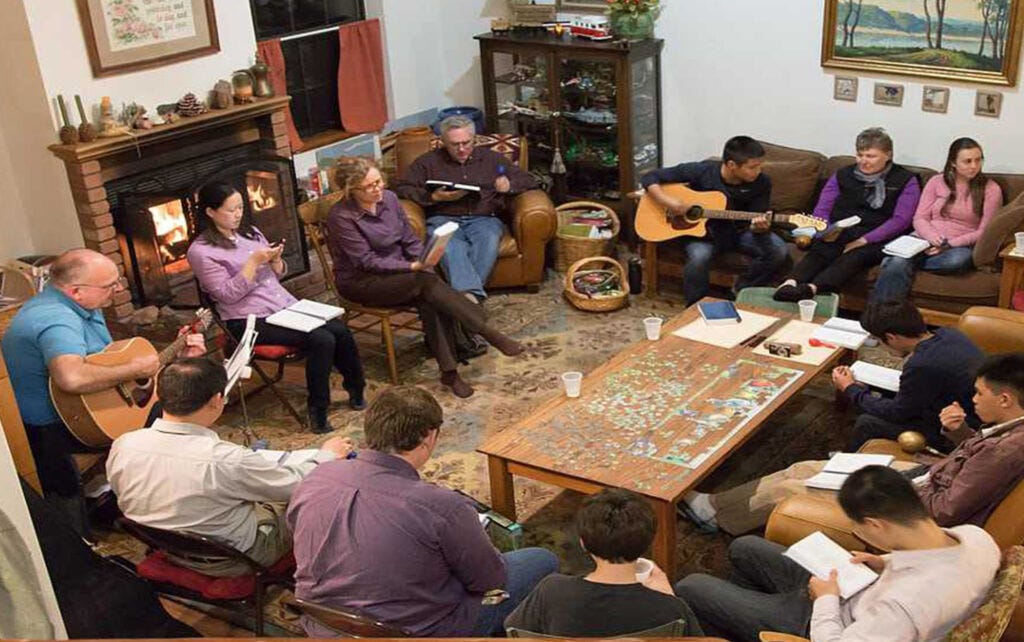
When we ask ourselves hard questions and examine our hearts, we make sure we are doing our best to pursue the calling God has placed deep inside our hearts and not from a place of rebellion. We are not victims. We have been called by God to be reformers and revitalizers.
And sometimes that is HARD! Be at Peace.
Love those who don’t get it.
Stay pure and keep your motives checked.
Remain humble and teachable.
Band together with those who understand your call.
Co-Laborers who are committed to following the Jesus Pattern in a multi-generational disciple-making movement, let us be among those who are counted in the number of those who say YES when Jesus calls!
Let’s do this!
This excerpt below is from a book by Dee Hock that comforts me in a very deep place and helps me turn my bitterness and hurt into hope and compassion.
I hope it helps you, too!
Note: Dee Hock is not a follower of Jesus. As a matter of fact, I’d suspect he is a pantheist of sorts. But, he came way before his time and pioneered a change movement that collided with an institutional, top-down, command-and-control culture of industry that was just as stressful and challenging as the one we face as church form “re-formers.” He feels what we feel when we lie in bed at night and wonder if we are unholy rebels.
From Dee Hock’s “One From Many” Page 199-203
When our internal model of reality is in conflict with rapidly changing external realities, there are three fundamental ways to respond:
First: We can cling to our old internal model and attempt to impose it on external conditions in a futile attempt to make them conform to our expectations. That is what most institutions compel us to attempt, and what we continually dissipate our ingenuity and ability trying to achieve. It is futile.
Second: We can engage in denial. We can refuse to accept the new external reality. We can pretend that external changes are not as profound as they really are, deny that we have an internal model, or that it bears examination. When the world about us appears to be irrational, erratic, and irresponsible, it is all too easy to blame others for the unpleasant, destructive things we experience. It is equally easy to abandon meaning, embrace fantasy, and engage in erratic behavior. Denial is also futile.
Third: We can attempt to understand and change our internal model of reality. That is the least common alternative, and for good reason. Changing an internal model of reality is extremely difficult, often terrifying, and always complex. It requires a meticulous, painful examination of beliefs. It requires a fundamental understanding of consciousness and how it must change. It destroys our sense of time and place. It calls into question our very identity. We can never be sure of our place or our value in a new order of things. Changing our internal model of reality requires an enormous act of faith, for it requires time to develop, and we require time to grow into it. Yet it is the only workable solution.
Those with the greatest power and wealth and the most prominent place in the old order of things have the most to lose. It is, therefore, understandable that so many of them close their minds to different possibilities and cling tenaciously to the old order of things. It is understandable that they engage in cosmetic change to palliate their discomfort and placate critics. It is understandable that they seek one another and merge the institutions they control to amass more and more power and wealth in order to perpetuate that to which they cling. It is understandable that they blind themselves to the fact that they are attempting to preserve the form of things long after form no longer serves function, a certain formula for failure, since the closest thing to a law of nature in the organizational world is that form has an affinity for expense, while function has an affinity for income.
Those in positions of power, wealth, and prestige who tenaciously cling to the present order of things deserve understanding, not condemnation, for they intuitively sense what Machiavelli discovered five centuries ago when he wrote: “Nothing is more difficult to take in hand, more perilous to conduct or more uncertain of success, than to take the lead in the introduction of a new order of things.”
No one should be condemned for failure to welcome change. This pervasive problem plagues us all. Dostoyevsky put it into perspective in the last century when he wrote: “Taking a new step, uttering a new word is what people fear most.”
But, what if those with the greatest power, wealth, and position were to open their minds to new possibilities, loosen their tenacious grasp on the old order of things, abandon the palliative of cosmetic change, open their eyes to new forms of organization, seriously question and change their internal model of reality?What if they were to cage the four beasts that devour their keeper-ego, envy, avarice, and ambition-and take the lead in a new order of things? What if they were to go before and show the way? Now there’s a challenge worthy of both the best among them and the best within them. I know that they can. And I will never give up that belief, or hope, that in time, enough of them will.
Hock, Dee. One from Many: VISA and the Rise of Chaordic Organization. Kindle Edition.
I've also found that it can, surprisingly enough, feel a little lonely. I don't like using that term in this context, it makes me cringe a little, but being misunderstood by people you seek adoration has that effect.
For some reason I am reminded of Francis Schaeffer’s encouragement that in being crucified with Christ…put to death, if you will…it’s not just the bad that must die…it’s all of me…the neutral, the bad, the seemingly good…in order for the new man to truly appear…the one made new in Christ.
I’m not exactly sure why my brain made that connection but I know his work at L’Abri was birthed out of much soul searching, God asking, contemplation, yearning for and to walk in what he referred to as ‘true Truth.’ To really walk according to the Word…the Spirit…the Word is Spirit and truth.