

Note: Get my new book, “Hand to the Plow: The Field Guide for Everyday Disciple-Makers” for 25% off! CLICK HERE and use the discount code: DMC.
From the Samaritan woman at the well to the Good Samaritan in the New Testament, the Bible uses stories of this people group to instruct us how to live our lives to honor God. What is a Samaritan? And who are these people whom the nation of Israel has looked down upon for over 3,000 years?
It’s easy to think of the people groups in the Bible as virtually fictional. But history proves that the cultures of the Old and New Testament are real, live humans having real-life experiences.
🤯 Get this 🤯
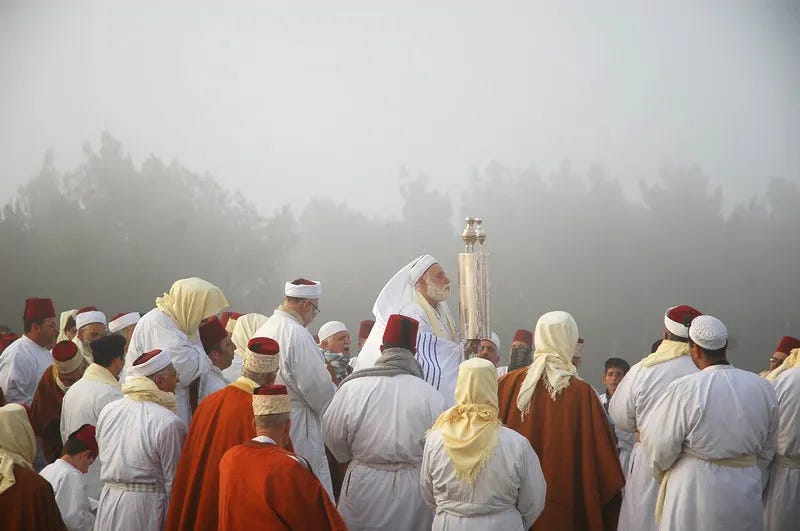
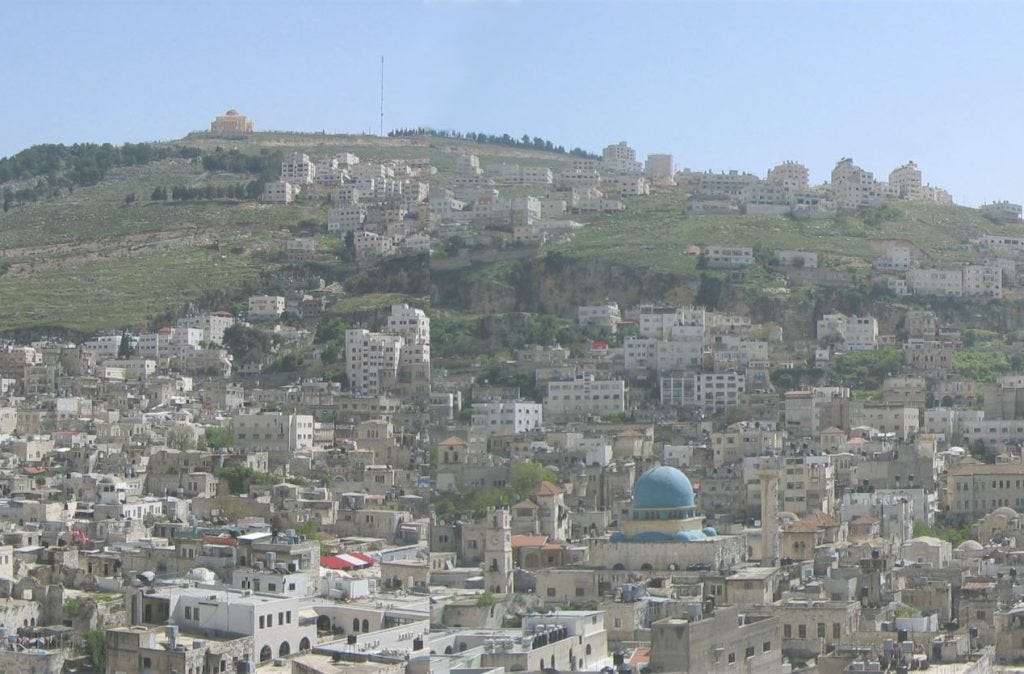
As of 2024, there are around 900 Samaritans, split between Israel (some 460 in Holon) and the West Bank (some 380 in Kiryat Luza) on Mount Gerizim near Nablus. (see Wikipedia) That means that around half of them live on the same mountain that they occupied 3,000 years ago.
That makes them one of the world’s smallest surviving ethnoreligious groups. To put the fragility in perspective, their numbers reached a record low of around 100 people during the early modern period and have slowly climbed back since.
💥 These Samaritans are the same people represented by the woman at the well, as told in John 4!

Let that sink in!
Over nine hundred living Samaritans in Palestine today! It’s hard to imagine in our post-biblical mindset that a group of people has lived in the same exact spot on the globe for over 3,000 years!
Who Are the Samaritans?
The History of Samaria
It’s hard to settle 100% on the origins of the modern-day Samaritans. However, we can find the birth of the city called Samaria quite easily.
Almost 1,000 years before Christ was born, Solomon was completing his reign over the Jews. Following his death, his son, Rehoboam, inherited the throne of Israel. Immediately, a leader named Jeroboam, who had served in his father’s Kingdom, surfaced with a challenging mandate. For all Israel to embrace Rehoboam as King, he must lighten the load of taxation and oppression (some things NEVER change 😂🤣😂).
King Solomon had placed Jeroboam in charge of forced labor in the previous Kingdom. He saw firsthand how much damage excessive taxation and oppression dealt to the people of Israel.
“Your father made our yoke hard; now therefore lighten the hard service of your father and his heavy yoke which he put on us, and we will serve you.”
Jeroboam (1 Kings 12:4)
Rehoboam ignored wise counselors pleading to lighten the load. He denied Jeroboam the relief he asked for. As a result, the Kingdom split into two as 10 of the 12 tribes of Israel pledged loyalty to Jeroboam.
Jeroboam traveled north to establish a new capital and retained the name Israel. Rehoboam stayed in Jerusalem to build Judah, the southern Kingdom.
A few generations after Jeroboam died, Omri, the King of the Northern Kingdom, took over. Omri purchased a hill from a fellow named Shemer, and that hill became known as Samaria. Israel had a new capital to replace the temple city in Jerusalem. The town sat beside the coveted Mt Gerizim.
Samaria was born.
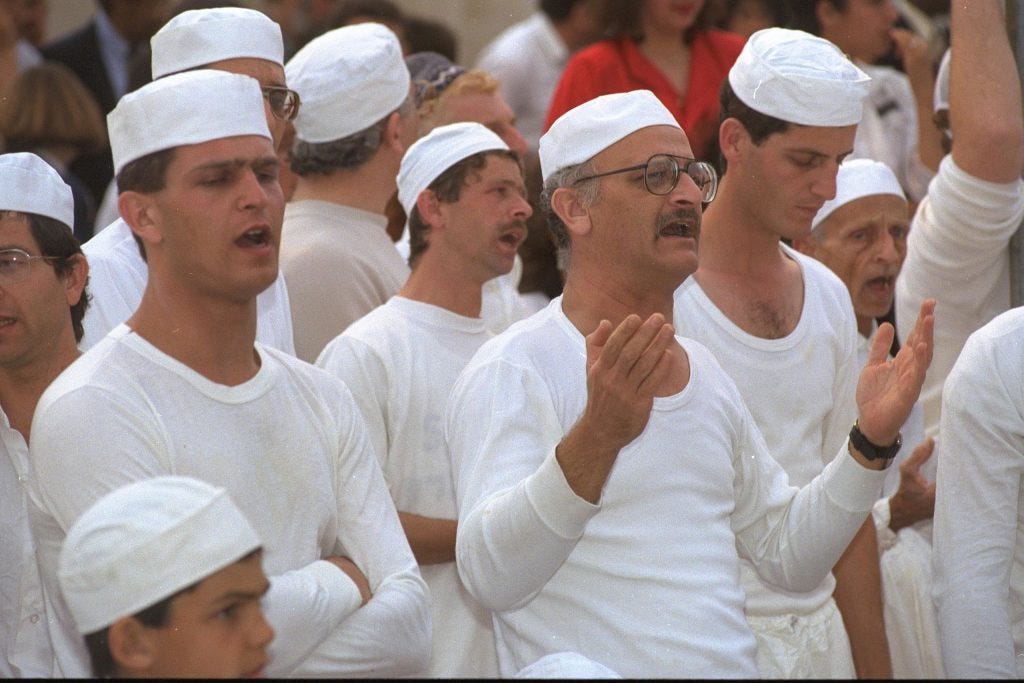
Jews setting up house in the new city of Samaria took on Gentile wives from the area. Israel viewed the resulting generation as a half-breed, unclean, rebellious people.
So, What’s Wrong with Samaritans?
It doesn’t get much worse than half-breed in the Jewish culture. After all, the Messiah was coming through the line of the Jews. He must. So it was imperative to keep the bloodline pure. God was serious about that.
But if there was anything more vile than a half-breed, it was a half-breed who demanded independence from the people God has called out to be His representatives – his nation.
Samaritans also set up their own “temple” on Mt. Gerizim, where we find this people group today. Losing access to Jerusalem meant they needed a new place to worship. And if that wasn’t egregious enough for the people of the Southern Kingdom, they claimed their place was the proper place of worship. To this day, they claim that they are the protector of the true law of God.
Mt. Gerizim became the central place of worship for these half-breed traitors who left to form their own Kingdom.
What’s so Special about Mt. Gerizim?
Mt. Gerizim is a 2,600-foot-tall mountain just south of the important city of Shechem. Just after Joshua defeated the city of Ai and before entering the Promised Land, God proclaimed that Mt. Gerizim was the place of blessing while Mt. Ebal was the place of curse. Therefore, the Samaritans believe that before Jerusalem was blessed, there was their mountain.
When the Lord your God has brought you into the land you are entering to possess, you are to proclaim on Mount Gerizim the blessings, and on Mount Ebal the curses.
Deuteronomy 11:29
You see this fact in the story of the woman at the well. It was a point of major conflict between the northern and southern kingdoms of Israel for a thousand years prior to this conversation at the well.
19 “Sir,” the woman said, “I can see that you are a prophet. 20 Our ancestors worshiped on this mountain, but you Jews claim that the place where we must worship is in Jerusalem.”
John 4:19
The Samaritans are a people group who are half-breed, rebellious people who worshipped at an illegitimate temple. Maybe we’re starting to get the picture.
People of the Southern Kingdom, inhabitants of Jerusalem, the very city of David, wanted nothing to do with this vile group of people lest they be contaminated by the darkness that prevailed over them.
These people weren’t just different; they were defiant!
Who would deny temple worship? Who would dare contaminate the bloodline and risk compromising the lineage of the Messiah, the Savior of Israel – the next conquering King of the Jews?
Enter Jesus,
the rabbi who could have chosen anyone to be his follower, but instead chose the Hebrew school flunkies who had to return home and work their parents’ businesses.
the teacher who tapped as his student the scum who lined his pockets with silver he skimmed off the top of oppressive Roman taxes he collected from his very own people.
the leader who invited into his circle the zealot who had probably sliced the throat of some innocent Roman soldier who had simply done what he was commanded to do by his commander.
Into town walked the long-awaited Messiah. He stopped to take a break at the well, most likely not stopping for a drink, but for a radical encounter. He could have played it safe and found a religious male Samaritan and still made His point. But that was not enough.
She jerked back, startled that a man would be standing at the well in the middle of the day. She came late because she couldn’t stand to see the others and feel so guilty, so lowly – not one more time.
He saw her, not as a woman who couldn’t keep a husband and took whatever she could get just to avoid the desperation of loneliness she felt when she went to bed alone at night without a man to give her life meaning.
He chose her because she was helpless, unable to fix herself and unable to change the opinion of others in town. Jesus engaged with her because she was the enemy of His lineage. The Messiah initiated a conversation with her because she was a representative of the people who worshipped on another mountain. He chose her because he looked past her DNA and beyond her failures and looked into her heart.
It was the same reason a rebellious half-breed, spiritually illegitimate Samaritan became the hero of the parable He would later tell when He looked an expert of the law in the eye who was trying to test Him.
He proclaimed through action – not just words – that neither race, religion, failure, gender, history, appearance, status, doubt, reputation, illegitimacy, relationships, worship style, nor anything else you could possibly imagine on this planet defines you. What He says about you and how you respond to His proclamation is your true identity. And His final mandate to his followers as He was departing was to baptize ALL people, teaching them to obey his commands!
Why Does It Matter?
900 Samaritans have been worshipping on that same mountain for over 3,000 long years! That lady at the well pointed to that very mountain in our story of Jesus.
They are still stuck between two cultures – even today! In the daytime among the public, they speak Arabic to keep the peace with those around them. But, when they return home, they speak the ancient language of God’s people. They still sacrifice on their holy mountain. Samaritans still celebrate the holy days of the Jews. They even claim to be the protectors of the original law of Moses.
The community was almost wiped off the face of the Earth in the early 20th century. Their community dipped below 150 people! But they are still here. Still holding fast to their identity.
Although still clinging to the Pentateuch and waiting for their Messiah, they stand as a reminder. Jesus stood beside a water well two millennia ago and proclaimed that anyone could come to Him. He would fill their otherwise unquenchable thirst for life!
Indeed, the water I give them will become in them a spring of water welling up to eternal life.
Jesus
Why do Samaritans Matter?
They matter because Jesus made a Samaritan the hero of a very important story to teach us about his Grace. Because a woman who was hopeless and spiritually thirsty found what she needed so that we would have a signpost to find what we need.
And because WE ARE ALL scarred. We are all lonely. We are all half-breed rebels in some way or another. It matters because HER story is OUR story. THEIR grace is OUR grace. It matters because no matter where you or I find ourselves, He is a spring of water welling up to eternal life.
DRINK DEEPLY!
This is what is so amazing to me about Jesus: He saw people differently than everyone else did.
He would not allow someone’s history, reputation, ethnicity, failures, or the labels others gave them to determine their worth.
I’m writing a series on women of the Bible. I will be writing on the Samaritan woman. She came to the well carrying more than a water jar. She came with everything she felt disqualified her. Jesus met her there… He didn’t recoil… He didn’t come with condemnation, but with truth, dignity, and an invitation into something deeper.
Maybe that’s why her story feels so personal to me.
Because we all have those places and those moments where we have wondered if our past has disqualified us.
It never has. Jesus still meets people at wells and And He still offers living water.
Sometimes the places we thought were evidence of rejection are the very place we encounter Him.
Great post Kevin.
Very good article! Now I have some thoughts and maybe some questions.
1) I always thought in my mind that all the Samaritan's converted to Jesus after she ran through the city and Jesus stayed to teach a few days. I had no idea Samaria is still waiting on the Messiah too. I wonder if anyone remembers the woman at the well? Do they have her in their history books? I wonder what happen to the Samaritans that did convert? Are they still talking about Jesus today in Samaria ? Just interesting things to look up, not really relevant for living out Christ crucified I don't think. Just nerdy things. Lol but only God knows what He uses to help us know Him deeper.
2) John to me is a chapter of God's love brought to earth through Jesus. Of course all the gospels reflect this sentiment but John focuses on redemption, resurrection and love. Same gospel different facets of this mercy. He even refers to himself as the one Jesus loves. Alot of the stories in John are unique to the other gospels and yet some are taught more than others. I think John is so rich in the mysteries of Christ. Thank you for bringing that to my attention that there are unique and hidden treasures only found in John.
3) I also love the point you made that Israel retained the name Israel. Even though they weren't perfect they wanted to make sure when people saw that name they knew they were with the one true God. Even more so they wanted to honor God. For them it was keep everyone else out so we don't dishonor God by their ways and traditions. Which was true but most lacked kindness and heart. God didn't expect them to keep Him for themselves but to share. They didn't understand that probably pride or something. Now I believe names of different denominations try to do the same thing. Some want to honor God by maintaining His truth and making sure people know they can find truth when they see such and such name. Others have pride and think they are the best such and such name and the only way to honor God is to be like them. Because Christian to me does not mean Christian anymore. With celebrities and anyone saying they are Christian but living widely counter Jesus do you think the name has gotten distorted? Maybe it's just me...
4) Final thoughts: We have to choose whether or not we will join His kingdom or stay in our own.
Thank you for reaching out! I enjoyed thinking on your article! ✨🌷🦋 Til next time!