


Front Note: This post is a bit of a departure from my regular content and tools related to multigenerational disciple-making. I hope you appreciate a different take on our understanding of the biblical view of discipleship from my friend and biblical scholar.
A couple of months ago, I asked our resident scholar, Dale Moreau, to draft a paper on discipleship from the perspective of a Divine Counsel Worldview (DCW). My goal was to ground the definition of discipleship in the ancient biblical context that Dale has spent a significant portion of his life studying.
Dale was super kind in working on this for us, and I am proud to partner with him on publishing this post!
On behalf of the Missional Disciple-Making Collective on Substack, thank you, Dale.
If you are interested in the Divine Counsel Worldview and scripture from its ancient cultural context, click below to follow the work of Dale Moreau and the Theological Voice Newsletter.
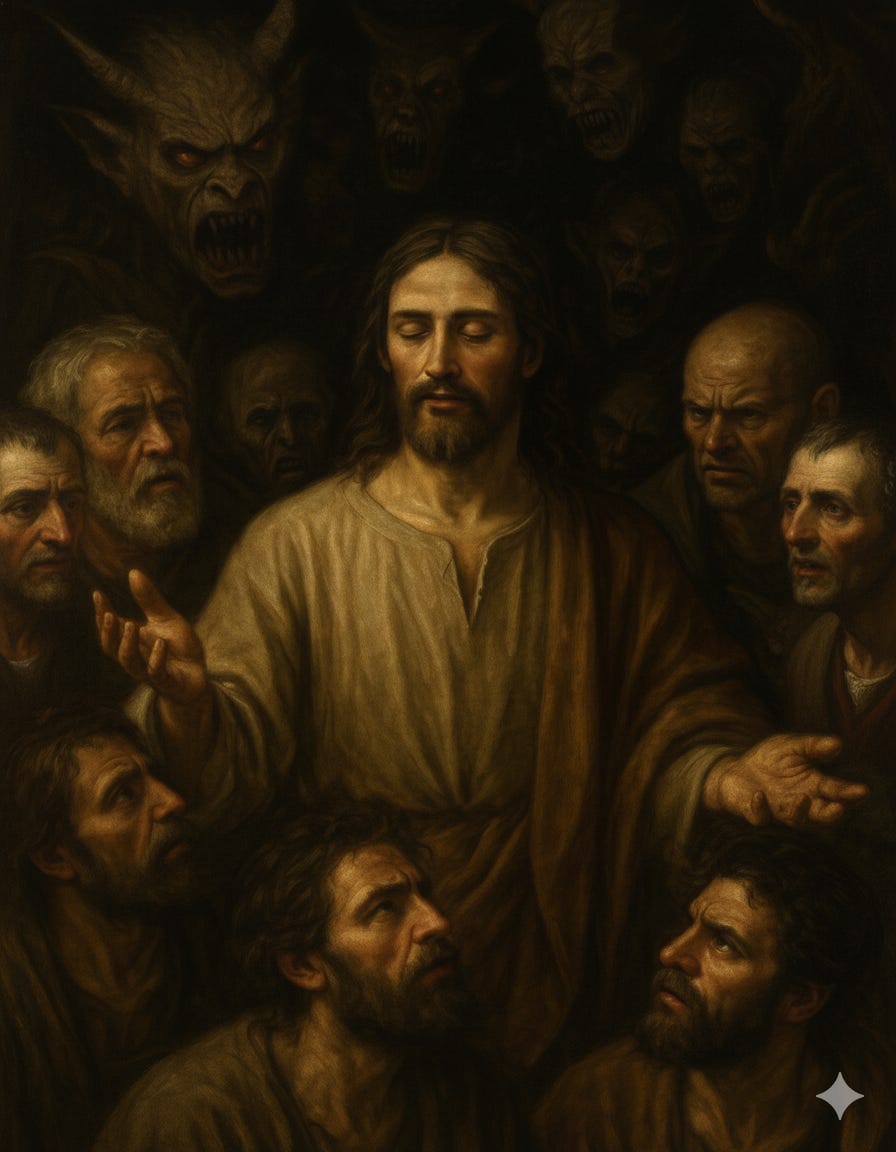
What is the Divine Counsel Worldview?
Before we get to Dale’s work, let me give you a quick primer on the Divine Counsel Worldview.
This theological perspective is a biblical framework that takes seriously the Bible’s portrayal of a populated spiritual realm—one in which God reigns as supreme King while presiding over a council of lesser spiritual beings. Rather than imagining God acting in isolation, this worldview reads passages such as Psalm 82, Psalm 89, 1 Kings 22, Job 1–2, and Daniel 7 as snapshots of a heavenly court where God delegates authority, renders judgment, and advances his purposes through spiritual agents.
This view insists on reading Scripture on its own ancient terms. The biblical authors lived in a world where spiritual beings, cosmic geography, and divine assemblies were assumed realities, not metaphors. The Divine Council worldview argues that modern readers often flatten these texts by imposing later philosophical ideas about God rather than listening to the text’s ancient context.
Within this framework, rebellion in the unseen realm (Genesis 6; Deuteronomy 32) helps explain the spread of evil, while Christ’s incarnation, resurrection, and exaltation are understood as the decisive reclaiming of authority over both earthly nations and rebellious spiritual powers.
Now, for Dale’s take on discipleship through the eyes of the DCW.
Discipleship as Cosmic Revelation by Dale Moreau
Layman’s Definition of Disciple
A disciple is a person whom God has made new in Christ, restored as an image-bearer, and who openly declares Jesus the risen Son of Man as their only Lord. A disciple orders their life under Jesus’ kingship, learns to reflect His character, rejects the claims of rival spiritual powers, and participates in His redemptive work in the world.
In clearer terms
A disciple is someone who belongs to Jesus, imitates Jesus, and lives as a visible sign of His rule in a world still contested by spiritual powers.
Layman’s Definition of Discipleship
Discipleship is the lifelong, Spirit-driven formation through which Christ shapes His people to share in His mission, extend His reign, and faithfully bear His image in a spiritually contested world.
It is not merely personal growth; it is participation in Jesus’ cosmic work of reclaiming creation for God.
Discipleship involves
Public allegiance to Jesus as Lord through baptism, confession, and belonging to His church
Imitating Christ’s life and character, including His humility, obedience, and cross-shaped pattern of self-giving
Daily obedience that resists spiritual darkness and demonstrates loyalty to Christ’s kingdom
Being restored in the image of God, prepared to share in Christ’s rule over the renewed creation
Engaging in the work of the kingdom, proclaiming the gospel, healing, reconciling, and reclaiming people and places for God
Living as citizens of the new creation, embodying Christ’s future reign in the present
Put most simply
Discipleship is the Spirit-empowered training by which Jesus forms His people to live under His authority, advance His kingdom, and manifest His victory over the powers until He renews all things.
Discipleship Inside a Bigger Story
In much Christian discussion, “discipleship” is treated as a private matter: learning the Bible, praying more, or improving one’s moral life. The New Testament includes these elements but places them within a much larger narrative about God, the nations, and unseen spiritual powers.
When the risen Jesus says, “All authority in heaven and on earth has been given to me” (Matt 28:18), he is not simply encouraging his followers; he is announcing his enthronement as the world’s true king. This claim echoes the vision of Daniel 7, where “one like a son of man” receives authority, glory, and an everlasting kingdom from the “Ancient of Days.”1
From this perspective, discipleship is not just about “my spiritual life.” It is about being drawn into the rule of the risen Son of Man, joining his mission to reclaim the nations, and living in a world where spiritual powers—good and evil—are real actors in the story.2
The Divine Council Worldview (DCW) helps make this visible. It emphasizes that God governs the world in the presence of other spiritual beings, some loyal and some rebellious, and that human life unfolds within this contested spiritual environment.3
In that framework, a disciple is a person whose loyalty has been transferred to the enthroned Christ, and discipleship is the lifelong process by which Christ trains his people to share in his mission to reclaim creation from hostile powers.
Jesus, the Nations, and the Reversal of Deuteronomy 32
The Great Commission as Royal Decree
Matthew 28:18-20 is often called “the Great Commission,” but it is also a royal decree.
Jesus first declares his universal authority, and only then commands, “Go therefore and make disciples of all nations.”
The logic is important:
• Because Jesus has been enthroned
• he now sends his followers under that authority,
• to bring the nations into obedient allegiance to him.4
Commentators note that this language deliberately recalls Daniel 7: the Son of Man is given authority over “all peoples, nations and men of every language.”5 In Matthew 28, this Danielic authority is now realized in the risen Jesus. He is no longer ministering only to “the lost sheep of Israel,” but sends his disciples to all nations, teaching and baptizing them into his name.6
The disciples do not possess this authority in themselves. Their authority is derivative: they act in Jesus’s name and depend on his promised presence—“I am with you always, to the end of the age” (Matt 28:20).7
Deuteronomy 32 and the Reclamation of the Nations
Within the DCW, Deuteronomy 32:8–9 is crucial. At Babel, God responds to human rebellion by scattering the nations and “apportioning” them under other divine beings, while keeping Israel as his own inheritance.8 In this view, the nations are effectively handed over to lesser elohim, who later become corrupt and hostile to God. The Great Commission and Pentecost mark the beginning of the reversal of that situation.
Michael Heiser describes Pentecost as the launch of “the reclamation of the nations disinherited at Babel,” in which the Spirit empowers Jesus’s followers to preach in the languages of those very nations.9
The church’s mission is therefore not simply geographic expansion; it is a spiritual repossession of peoples who had long been under the rule of other spiritual powers.
This means that discipleship is inseparable from mission to the nations: to make disciples is to participate in God’s plan to bring the Gentiles back under the rule of the true King, Jesus the Messiah, and to dethrone the spiritual powers that claimed them.10
Spiritual Powers, Idolatry, and Public Allegiance
Principalities, Powers, and Idols
The New Testament treats idolatry and spiritual powers as a real threat, not a mere metaphor. Paul acknowledges that in the pagan world, people assume a cosmos filled with divinities and powers. He does not adopt that worldview uncritically, but he does affirm that behind idols there are real spiritual beings opposed to God.11
In 1 Corinthians 10, he warns that what pagans sacrifice “they offer to demons and not to God” (1 Cor 10:20). Participation in idol feasts is therefore incompatible with participation in the Lord’s Table. Idolatry is not neutral; it is a competing claim on human loyalty. G. K. Beale summarizes Paul’s principle as: “We become what we worship.”12
The New Testament also exposes idolatry in less visible forms. Greed is labeled “idolatry” (Col 3:5) because when possessions or desires become the ultimate concern, they take the place of God.13 Discipleship, then, involves exclusive loyalty to Christ. It refuses to share allegiance between Jesus and other gods, whether those gods are statues, money, or ideologies.
Ephesians 6: Between Heaven and Earth
Ephesians 6:10–12 gives one of the clearest summaries of the spiritual situation: believers struggle “not against flesh and blood, but against the rulers, against the authorities, against the cosmic powers over this present darkness.” Derek Prince describes this as a universal conflict that involves both earth and the heavens.14
Commentators warn against reducing this struggle either to purely “invisible” spiritual warfare or purely social and political critique. Gary Burge emphasizes that the New Testament sees both spiritual forces and earthly structures are intertwined.15
Margaret MacDonald notes that what happens in daily life has a “cosmic referent”; our actions participate in a larger conflict in the heavenly realms.16 In this context, discipleship means learning to live in this tension: recognizing the reality of spiritual opposition, while avoiding any justification of violence or hatred against human opponents.
Haruko Ward reminds us that spiritual warfare language has sometimes been misused to legitimize aggression; Ephesians 6, however, describes a struggle fought with truth, righteousness, faith, and prayer, not with weapons.17
Christ’s Triumph and the Position of the Church
Paul’s language about principalities and powers in Ephesians 1:20–23 and Colossians 2:15 stresses that these powers have been decisively defeated in Christ. Michael Goheen argues that Paul is responding to communities tempted to live under the domination of social and cultural “powers” that claimed ultimate allegiance.18
Christ’s cross strips these powers of their absolutizing claims and restores them—at least in principle—to their proper place as created entities under God.
Clinton Arnold shows that this means believers no longer need to resort to magical practices or spiritual technologies to manage unseen forces; Christ’s victory has exposed their limits.19 F. Stuart Piggin notes that, in Paul’s view, believers are “enthroned with Christ” and called to live as those who share in his exaltation.20
Discipleship, then, is not simply defense against the powers; it is a form of participation in Christ’s rule over them.
Baptism, the Lord’s Table, and the Church as Kingdom Outposts
Baptism as Transfer of Ownership
New Testament and early Christian practice treat baptism as a public act of transfer from one lordship to another. In Colossians, Paul connects baptism with participation in Christ’s death, burial, and resurrection, and commentators highlight its connection to the defeat of hostile powers.21
Early baptismal liturgies included explicit renunciations of Satan and every work of darkness. Simon Chan describes baptism as a ritual that claims “the totality of life” and signals a cosmic struggle to reclaim humanity.22 Meredith Kline interprets baptism as a covenant sign that seals a new allegiance relationship with Christ as Lord.23
In DCW terms, baptism announces before heaven and earth that a human being has been transferred from the realm of rebellious powers to the jurisdiction of the risen King. It is not a private moment of inward spirituality; it is a visible reallocation of spiritual ownership.
The Lord’s Table as Visible Geography of the Kingdom
Where baptism marks entry, the Lord’s Table marks ongoing participation in Christ’s rule. Jonathan Leeman argues that local churches, especially when gathered at the Table, function as “embassies” of heaven—visible representations of Christ’s kingdom inside the territory of the present age.24
The Table, like a family dining table, expresses unity and belonging. Robert Webber calls it the strongest symbol of Christian oneness.25 J. Todd Billings adds that at the Table, believers bring their actual bodies and relationships; the meal becomes a place where hidden conflicts and wounds can surface, and where participants experience a foretaste of the harmonious kingdom yet to come.26
From a DCW standpoint, each local congregation gathered around Word and Table is a small but real piece of reclaimed sacred space—a local point at which Christ’s heavenly rule becomes visible on earth.
Acts and the Spread of Sacred Space
The book of Acts portrays the church as the continuation of Jesus’s kingdom ministry and the spatial extension of his rule. S. T. Antonio describes the church as a multiethnic movement empowered by the Spirit, forming local gatherings among the nations.27
Patrick Schreiner emphasizes that the ascended Christ directs the spread of the gospel from his throne, reordering earthly space by sending witnesses from Jerusalem to the ends of the earth.28 These communities live under a different authority structure from that of the surrounding empire.
Andrew Perriman notes that their willingness to suffer for Christ’s name is tied to their understanding that Jesus is already exalted above earthly powers.29 Charles Erlandson describes the church as the extension of Christ’s incarnation, where a “New Man” emerges—a renewed humanity identified with Christ through baptism and faith.30
In short, the church’s presence in the world is not accidental. It is the kingdom's spatial strategy: small, scattered outposts of sacred space within territories once dominated by rival powers.
Discipleship, Image of God, and New Creation
Restored Image and Human Vocation
From Genesis onward, humans are portrayed as made in God’s image and called to exercise dominion over creation. G. K. Beale describes this as a royal role: humans act as visible representatives of God’s rule on earth.31 Mark Liederbach and Evan Lenow stress that this vocation is not limited to “religious” activities; it includes culture, work, and social life in all its forms.32
The fall damages this capacity. Steven Duby argues that the image includes righteousness, holiness, and wisdom—qualities necessary for proper dominion—and that these are distorted by sin.33 Redemption, therefore, involves both moral renewal and restoration of human vocation. Catherine McDowell notes that New Testament language about being conformed to the image of Christ carries this double dimension: character and calling.34
Discipleship, in this frame, is the process by which redeemed humans are re-fitted for their original role: wise, holy representation of God’s purposes in the world.
Vicegerency and Inheritance
The New Testament picks up the theme of humanity’s royal calling with language of “inheritance” and “reign.” Michael Pocock and Enoch Wan describe believers as renewed vice-regents—official representatives commissioned to act on God’s behalf in an alienated world.35 Christopher Beetham traces a narrative in which a community of “royal sons” ultimately inherits the world in Christ.36
Joshua Jipp shows that Old Testament texts anticipate an eschatological ruler who will receive the nations as his inheritance; the New Testament applies this to Jesus and then extends the implications to those united with him.37 Frank Viola describes the kingdom as Jesus reclaiming the earth that rightly belongs to him.38
Michael Heiser, from a DCW perspective, underscores that the earth was always intended to be administered by humans, not angels; in Christ, humans are elevated to share in God’s earthly rule.39
In Romans 8, Paul connects this with creation itself. Ted Turnau argues that biblical redemption is “material and cosmic,” not limited to souls.40 Jonathan King points out that creation “groans” in birth pangs, awaiting its liberation when the children of God are revealed.41
Inheritance is therefore not a private spiritual reward; it is participation in a renewed creation.
New Creation and the Ministry of Reconciliation
New creation language pulls these threads together. Philip Hughes argues that Jesus’s resurrection signals the rebirth of humanity and the fulfillment of God’s original plan, not the abandonment of creation.42 John Frame notes that believers are remade in the image of Christ with new knowledge, righteousness, and holiness.43
Lawrence Richards suggests that only metaphors like “new birth” and “new creation” adequately describe the depth of change God initiates.44 G. K. Beale and Mitchell Kim connect this to temple theology: as God dwells among his people, they become the beginning of a renewed cosmic temple in which all things will eventually be reconciled to Christ.45
In this light, discipleship is not simply individual moral improvement. It is participation in a project of cosmic renewal, where renewed humans serve as agents of reconciliation in preparation for the full unveiling of new creation.
Discipleship as Participation in Christ’s Cosmic Victory
Put together, the lay-theological picture looks like this:
God assigned the nations to other spiritual beings, but promised a future king who would inherit them.
Jesus, the Son of Man, has now been enthroned and claims all authority in heaven and on earth.
The Great Commission and Pentecost initiate the recovery of the disinherited nations and the exposure of unjust spiritual rulers (Psalm 82).
Baptism and the Lord’s Table are public acts of allegiance, signaling a transfer of ownership from the powers to Christ.
Local churches function as kingdom embassies—small territories of reclaimed sacred space inside the present world.
Discipleship is the process by which the risen Christ trains his people to live under his authority, resist rival powers, and be restored to their original calling as image-bearing vice-regents in a creation that is on its way to being made new.
This framework keeps discipleship firmly theological and cosmic: it is about how God, in Christ and by the Spirit, reclaims the nations, restores sacred space, and prepares a renewed humanity to share in his rule in the new creation.
Endnotes
Leland Ryken et al., Dictionary of Biblical Imagery (Downers Grove, IL: InterVarsity Press, 2000), 57.
Michael W. Goheen, A Light to the Nations: The Missional Church and the Biblical Story (Grand Rapids, MI: Baker, 2011), 171.
Michael S. Heiser, The Unseen Realm: Recovering the Supernatural Worldview of the Bible (Bellingham, WA: Lexham Press, 2015), 113.
Gary M. Burge and Andrew E. Hill, eds., The Baker Illustrated Bible Commentary (Grand Rapids, MI: Baker Books, 2012), 1005.
Dorothy Jean Weaver and David Rhoads, The Irony of Power: The Politics of God within Matthew’s Narrative (Eugene, OR: Pickwick Publications, 2017).
Burge and Hill, Baker Illustrated Bible Commentary, 1005.
Ibid.
Heiser, Unseen Realm (2015), 113.
Michael S. Heiser, Demons: What the Bible Really Says about the Powers of Darkness (Bellingham, WA: Lexham Press, 2020), 219. Discipleship as Cosmic Reclamation, Layman’s Version, page 11
Benjamin J. Noonan, “Old Testament. Review of The Unseen Realm by Michael S. Heiser,” Themelios 41, no. 2 (2016): 306.
Walter C. Kaiser Jr., Peter H. Davids, et al., Hard Sayings of the Bible (Downers Grove, IL: InterVarsity, 1996), 597.
G. K. Beale, We Become What We Worship: A Biblical Theology of Idolatry (Downers Grove, IL: IVP Academic, 2018), 223.
Walter A. Elwell and Philip Wesley Comfort, Tyndale Bible Dictionary (Wheaton, IL: Tyndale House, 2001), 625–26.
Derek Prince, Spiritual Warfare: Headquarters (New Kensington, PA: Whitaker House, 2001), 16–112.
Gary M. Burge, Galatians and Ephesians through Old Testament Eyes (Grand Rapids, MI: Kregel Academic, 2025), 283.
Margaret Y. MacDonald, Colossians and Ephesians, Sacra Pagina 17 (Collegeville, MN: Liturgical Press, 2000), 225–26.
Haruko Nawata Ward, “Theological Perspective on Ephesians 6:10–20,” in Feasting on the Word: Year B, ed. David L. Bartlett and Barbara Brown Taylor (Louisville, KY: Westminster John Knox, 2009), 374–79.
Goheen, Light to the Nations, 171.
Clinton E. Arnold, “Magic,” in Dictionary of Paul and His Letters, ed. Gerald F. Hawthorne, Ralph P. Martin, and Daniel G. Reid (Downers Grove, IL: InterVarsity Press, 1993), 582.
F. Stuart Piggin, “Principalities and Powers,” in Evangelical Dictionary of Theology, ed. Daniel J. Treier and Walter A. Elwell (Grand Rapids, MI: Baker Academic, 2017), 698.
David E. Garland, Colossians and Philemon, The NIV Application Commentary (Grand Rapids, MI: Zondervan, 1998), 169.
Simon Chan, Liturgical Theology: The Church as Worshiping Community (Downers Grove, IL: IVP Academic, 2006), 118–19.
Meredith G. Kline, By Oath Consigned: A Reinterpretation of the Covenant Signs of Circumcision and Baptism (Grand Rapids, MI: Eerdmans, 1975), 79–80.
Jonathan Leeman, “Churches: The Embassies and Geography of Heaven,” 9Marks Journal (March–December 2020): 88–96.
Robert Webber, Music and the Arts in Christian Worship, The Complete Library of Christian Worship (Nashville, TN: Star Song, 1994), 570.
J. Todd Billings, Remembrance, Communion, and Hope: Rediscovering the Gospel at the Lord’s Table (Grand Rapids, MI: Eerdmans, 2018), 170.
S. T. Antonio, Insider Church: Ekklesia and the Insider Paradigm (Littleton, CO: William Carey Publishing, 2020), 19.
Patrick Schreiner, The Mission of the Triune God: A Theology of Acts, New Testament Theology (Wheaton, IL: Crossway, 2022), 52–53.
Andrew Perriman, Re:Mission: Biblical Mission for a Post-Biblical Church (Milton Keynes; Colorado Springs; Hyderabad: Paternoster, 2007), 102–3.
Charles Erlandson, Take This Cup: How God Transforms Suffering into Glory and Joy (Eugene, OR: Wipf and Stock, 2020).
G. K. Beale, A New Testament Biblical Theology: The Unfolding of the Old Testament in the New (Grand Rapids, MI: Baker Academic, 2011), 31.
Mark D. Liederbach and Evan Lenow, Ethics as Worship: The Pursuit of Moral Discipleship (Phillipsburg, NJ: P&R, 2021), 79–80.
Steven J. Duby, God in Himself: Scripture, Metaphysics, and the Task of Christian Theology (Downers Grove, IL: IVP Academic, 2019), 236.
Catherine McDowell, “Image of God,” in Dictionary of the New Testament Use of the Old Testament, ed. G. K. Beale et al. (Grand Rapids, MI: Baker Academic, 2023), 351.
Michael Pocock and Enoch Wan, Diaspora Missiology: Reflections on Reaching the Scattered Peoples of the World (Pasadena, CA: William Carey Library, 2015), 120.
Christopher A. Beetham, “From Creation to New Creation,” in From Creation to New Creation: Biblical Theology and Exegesis, ed. Daniel M. Gurtner and Benjamin L. Gladd (Peabody, MA: Hendrickson, 2013), 252–53.
Joshua W. Jipp, The Messianic Theology of the New Testament (Grand Rapids, MI: Eerdmans, 2020), 335.
Frank Viola, Insurgence: Reclaiming the Gospel of the Kingdom (Grand Rapids, MI:Baker, 2018).
Michael S. Heiser, The Unseen Realm: Discovering the Supernatural World of the Bible (Bellingham, WA: Lexham Press, 2025), 385, 459.
Ted Turnau, Oasis of Imagination: Engaging Our World through a Better Creativity (Oxford, UK: IVP, 2023).
Jonathan King, The Beauty of the Lord: Theology as Aesthetics (Bellingham, WA: Lexham Press, 2018), 315–16.
Philip Edgcumbe Hughes, The True Image: The Origin and Destiny of Man in Christ (Grand Rapids, MI; Leicester, UK: Eerdmans; Inter-Varsity, 1989), 384.
John M. Frame, Systematic Theology: An Introduction to Christian Belief (Phillipsburg, NJ: P&R, 2013), 191.
Lawrence O. Richards, New International Encyclopedia of Bible Words: Based on the NIV and the NASB (Grand Rapids, MI: Zondervan, 1999), 203.
G. K. Beale and Mitchell Kim, God Dwells among Us: A Biblical Theology of the Temple (Downers Grove, IL: IVP Academic, 2021), 133.
Selected Bibliography (Works cited in the endnotes.)
Antonio, S. T. Insider Church: Ekklesia and the Insider Paradigm. Littleton, CO: William Carey Publishing, 2020.
Arnold, Clinton E. “Magic.” In Dictionary of Paul and His Letters, edited by Gerald F. Hawthorne, Ralph P. Martin, and Daniel G. Reid, 571–83. Downers Grove, IL: InterVarsity Press, 1993.
Beale, G. K. A New Testament Biblical Theology: The Unfolding of the Old Testament in the New. Grand Rapids, MI: Baker Academic, 2011.
———. We Become What We Worship: A Biblical Theology of Idolatry. Downers Grove, IL: IVP Academic, 2018.
Beale, G. K., and Mitchell Kim. God Dwells among Us: A Biblical Theology of the Temple. Downers Grove, IL: IVP Academic, 2021.
Beetham, Christopher A. “From Creation to New Creation: The Biblical Epic of King, Human Vicegerency, and Kingdom.” In From Creation to New Creation: Biblical Theology and Discipleship as Cosmic Reclamation, Layman’s Version, page 14
Exegesis, edited by Daniel M. Gurtner and Benjamin L. Gladd, 233–58. Peabody, MA: Hendrickson, 2013.
Burge, Gary M. Galatians and Ephesians through Old Testament Eyes: A Background and Application Commentary. Grand Rapids, MI: Kregel Academic, 2025.
Burge, Gary M., and Andrew E. Hill, eds. The Baker Illustrated Bible Commentary. Grand Rapids, MI: Baker Books, 2012.
Chan, Simon. Liturgical Theology: The Church as Worshiping Community. Downers Grove, IL: IVP Academic, 2006.
Duby, Steven J. God in Himself: Scripture, Metaphysics, and the Task of Christian Theology. Downers Grove, IL: IVP Academic, 2019.
Elwell, Walter A., and Philip Wesley Comfort. Tyndale Bible Dictionary. Wheaton, IL: Tyndale House, 2001.
Erlandson, Charles. Take This Cup: How God Transforms Suffering into Glory and Joy. Eugene, OR: Wipf and Stock, 2020.
Frame, John M. Systematic Theology: An Introduction to Christian Belief. Phillipsburg, NJ: P&R, 2013.
Garland, David E. Colossians and Philemon. The NIV Application Commentary. Grand Rapids, MI: Zondervan, 1998.
Goheen, Michael W. A Light to the Nations: The Missional Church and the Biblical Story. Grand Rapids, MI: Baker, 2011.
Heiser, Michael S. Demons: What the Bible Really Says about the Powers of Darkness. Bellingham, WA: Lexham Press, 2020.
———. The Unseen Realm: Discovering the Supernatural World of the Bible. Bellingham, WA: Lexham Press, 2025.
———. The Unseen Realm: Recovering the Supernatural Worldview of the Bible. Bellingham, WA: Lexham Press, 2015.
Hughes, Philip Edgcumbe. The True Image: The Origin and Destiny of Man in Christ. Grand Rapids, MI; Leicester, UK: Eerdmans; Inter-Varsity, 1989.
Jipp, Joshua W. The Messianic Theology of the New Testament. Grand Rapids, MI: Eerdmans, 2020.
Kaiser, Walter C., Jr., Peter H. Davids, et al. Hard Sayings of the Bible. Downers Grove, IL: InterVarsity, 1996.
King, Jonathan. The Beauty of the Lord: Theology as Aesthetics. Bellingham, WA: Lexham Press, 2018.
Kline, Meredith G. By Oath Consigned: A Reinterpretation of the Covenant Signs of Circumcision and Baptism. Grand Rapids, MI: Eerdmans, 1975.
Leeman, Jonathan. “Churches: The Embassies and Geography of Heaven.” 9Marks Journal (March–December 2020): 88–96.
Liederbach, Mark D., and Evan Lenow. Ethics as Worship: The Pursuit of Moral Discipleship. Phillipsburg, NJ: P&R, 2021.
MacDonald, Margaret Y. Colossians and Ephesians. Sacra Pagina 17. Collegeville, MN: Liturgical Press, 2000.
McDowell, Catherine. “Image of God.” In Dictionary of the New Testament Use of the Old Testament, edited by G. K. Beale et al., 346–52. Grand Rapids, MI: Baker Academic, 2023.
Noonan, Benjamin J. “Old Testament. Review of The Unseen Realm by Michael S. Heiser.” Themelios 41, no. 2 (2016): 306–8.
Perriman, Andrew. Re:Mission: Biblical Mission for a Post-Biblical Church. Milton Keynes; Colorado Springs; Hyderabad: Paternoster, 2007.
Piggin, F. Stuart. “Principalities and Powers.” In Evangelical Dictionary of Theology, edited by Daniel J. Treier and Walter A. Elwell, 695–99. Grand Rapids, MI: Baker Academic, 2017.
Pocock, Michael, and Enoch Wan. Diaspora Missiology: Reflections on Reaching the Scattered Peoples of the World. Pasadena, CA: William Carey Library, 2015.
Prince, Derek. Spiritual Warfare: Headquarters. New Kensington, PA: Whitaker House, 2001.
Richards, Lawrence O. New International Encyclopedia of Bible Words: Based on the NIV and the NASB. Grand Rapids, MI: Zondervan, 1999.
Ryken, Leland, et al. Dictionary of Biblical Imagery. Downers Grove, IL: InterVarsity Press, 2000.
Schreiner, Patrick. The Mission of the Triune God: A Theology of Acts. New Testament Theology. Wheaton, IL: Crossway, 2022.
Turnau, Ted. Oasis of Imagination: Engaging Our World through a Better Creativity. Oxford, UK: IVP, 2023.
Viola, Frank. Insurgence: Reclaiming the Gospel of the Kingdom. Grand Rapids, MI: Baker, 2018.
Ward, Haruko Nawata. “Theological Perspective on Ephesians 6:10–20.” In Feasting on the Word: Preaching the Revised Common Lectionary: Year B, edited by David L. Bartlett and
Barbara Brown Taylor, 374–79. Louisville, KY: Westminster John Knox, 2009.
Webber, Robert. Music and the Arts in Christian Worship. The Complete Library of Christian Worship. Nashville, TN: Star Song, 1994.
Thank you for posting.